
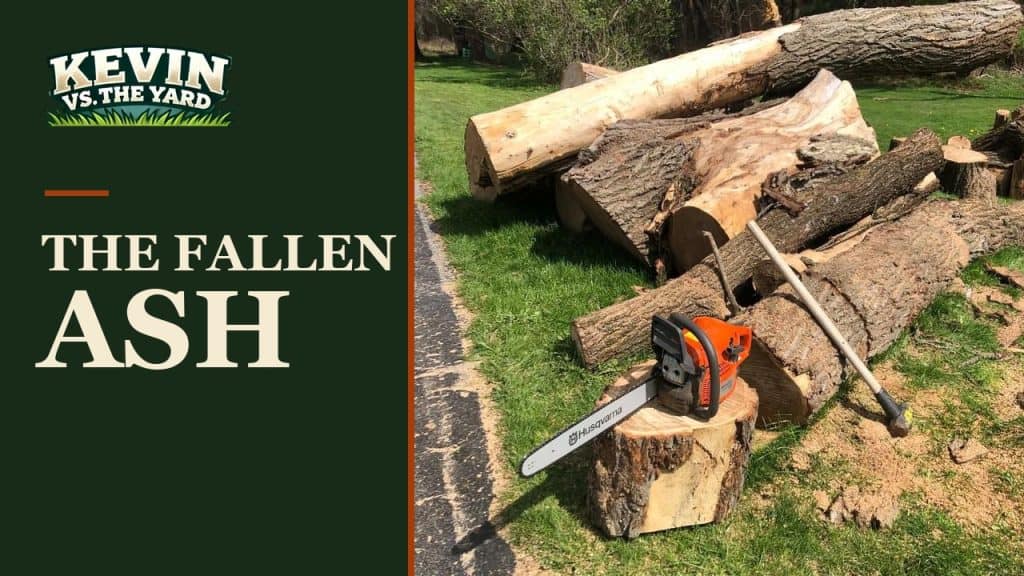
One gigantic ash tree, a damaged roof, two weeks of work and a whole lot of firewood.
Of all the jobs I’ve tackled on our ten-acre property in northeastern Ohio, I think it’s safe to say that 2026 presented me with my biggest challenge yet.
It all started with my son coming to tell me that there was a huge tree lying on the ground.
We had experienced a rather strong windstorm around March 20th. Living on a property surrounded by trees, I’ve become somewhat accustomed to finding fallen branches and the occasional tree after a storm.
This time was a little different.
And the piece of equipment that would eventually help me deal with the aftermath was my Husqvarna 440 gas chainsaw.
The March Windstorm That Brought Down Our Giant Ash Tree
I stepped outside to discover that our gigantic front yard green ash (Fraxinus pennsylvanica) had come down, completely blocking our driveway.
As I approached the tree, I realized that the very tip of it had struck our roof. Upon closer inspection, there was a hole in the wall leading straight into our attic.
Well, there goes my spring.

Living on ten acres in northeastern Ohio has taught me that storm damage is something I have to deal with quite regularly. In 2023 alone, I counted as many as nine trees that had fallen on our property within a matter of months.
This particular ash tree, though, was an entirely different undertaking.
From Storm Damage to a Mountain of Firewood
A storm removal company arrived fairly quickly to deal with the immediate situation. At some point, they asked me what I wanted them to do with all the wood. Should they haul it away?
My answer was no.
I spend time every year cutting firewood, splitting it, stacking it and letting it season so we can use it to heat our home during winter.
Considering the sheer amount of wood lying across our driveway, I wasn’t particularly interested in letting all of that potential firewood leave the property.
The company cut the tree into several enormous logs, piled them up and left.
Looking at that pile, I began to realize just how much work I had volunteered myself for.

Why I Chose the Husqvarna 440 Chainsaw
I’ve accumulated a few chainsaws over the years.
In my garage are Greenworks cordless chainsaws, a Black Max 20-inch 50cc gasoline chainsaw and, of course, my Husqvarna 440.
My Greenworks 40V cordless chainsaw has served me remarkably well over the years. It was actually the only chainsaw I owned during our first years of maintaining ten acres.
My Black Max, on the other hand, has probably caused me more frustration than any other chainsaw I’ve owned. That’s a story for another day.
For this particular job, I decided to give the Husqvarna 440 a go.
It’s not one of the bigger Husqvarna Rancher chainsaws, and I certainly wasn’t under the impression that I had purchased some extraordinarily powerful professional forestry machine.
What appealed to me was something rather simple: its weight.
My Black Max feels considerably bulkier in my hands. The Husqvarna 440 felt lighter and easier to handle.
Looking at the sheer volume of wood in front of me, I knew I would be spending entire afternoons out there.
That difference mattered to me.

Husqvarna 440 Gas Chainsaw Specifications and Features
Before getting into my personal experience, here are some of the manufacturer-listed specifications for the Husqvarna 440.
| Specification | Husqvarna 440 |
|---|---|
| Engine type | 2-cycle X-Torq engine |
| Engine displacement | 40.9cc |
| Power output | 2.4 hp |
| Available bar configuration | 18-inch bar and chain |
| Recommended bar length range | 13–18 inches |
| Powerhead weight without cutting equipment | Approximately 9.78 lbs |
| Fuel mixture | 50:1 |
| Starting technology | Smart Start |
| Vibration reduction | LowVib |
| Air filtration | Air Injection |
| Safety feature | Inertia-activated chain brake |
| Chain tensioning | Side-mounted tensioner |
Source: Husqvarna official 440 product information.
The specifications above refer to the manufacturer’s listed 18-inch chainsaw configuration. Equipment configurations and the supplied bar and chain can vary.
The 40.9cc, 2.4-HP X-Torq Engine
The Husqvarna 440 falls into the roughly 40cc class of gas chainsaws.
Its 2-cycle X-Torq engine is designed to reduce fuel consumption and exhaust emissions, according to Husqvarna.
On paper, a 40.9cc engine might not sound particularly impressive compared with some of the larger gasoline-powered chainsaws available.
My Black Max, for instance, has a 50cc engine.
But as I’ve come to learn through working on our property, engine displacement isn’t the only thing that matters to me.
Weight, reliability and comfortable handling are factors I appreciate just as much, especially during longer work sessions.
Smart Start, LowVib and Air Injection
Among the chainsaw features Husqvarna advertises are Smart Start technology, LowVib dampeners and its Air Injection centrifugal air cleaning system.
Smart Start is intended to make starting the engine easier, and the LowVib system reduces vibrations transmitted through the handles.
The Air Injection system separates larger particles of debris from the incoming air before they reach the air filter, which Husqvarna describes as helping prolong engine life.
These are manufacturer-described features rather than things I’ve independently tested or measured.
What I was primarily interested in was whether this relatively lightweight gas-powered chainsaw could get me through the enormous pile of ash logs sitting in our front yard.
A Few Words About My Experience
Before I get any further, I should probably explain what Kevin Vs The Yard is all about.
I’m not a professional arborist, logger, landscaper or mechanic. Nobody has ever trained me to maintain ten acres of rural property.
I’m a father of two who happens to own ten acres and has spent the past five years trying to figure out what to do with them.
I’m still a beginner in many respects. I’m certainly not here to pretend I know everything or dish out equipment recommendations like Halloween candy.
What I can share is my experience with the tools I actually own, the work I’ve done with them and the things I’ve learned along the way.
This is one of those experiences.
Getting Started After Easter
The ash tree was still incredibly wet when it came down.
During my initial attempts at cutting the wood, I noticed just how much moisture was coming from the freshly fallen tree. My chain was practically dripping wet.
I decided to leave the logs alone for a few weeks and return to the job after Easter.
That was simply my personal decision at the time, not a recommendation about when freshly fallen trees should be processed.
I knew this wasn’t going to be an afternoon’s worth of work.
Some of these logs were enormous in diameter. I was about to find out what my Husqvarna 440 chainsaw could accomplish.
Putting the Husqvarna 440 to Work on Large Hardwood Logs
One of the things I appreciated almost immediately was how easy the Husqvarna 440 was for me to handle.
I’ve used my smaller cordless chainsaw for plenty of jobs involving branches, small trees and even larger hardwood trees over the years.
I’ve learned that there is quite a difference between cutting a few smaller logs for firewood and spending several days working through an enormous fallen tree.
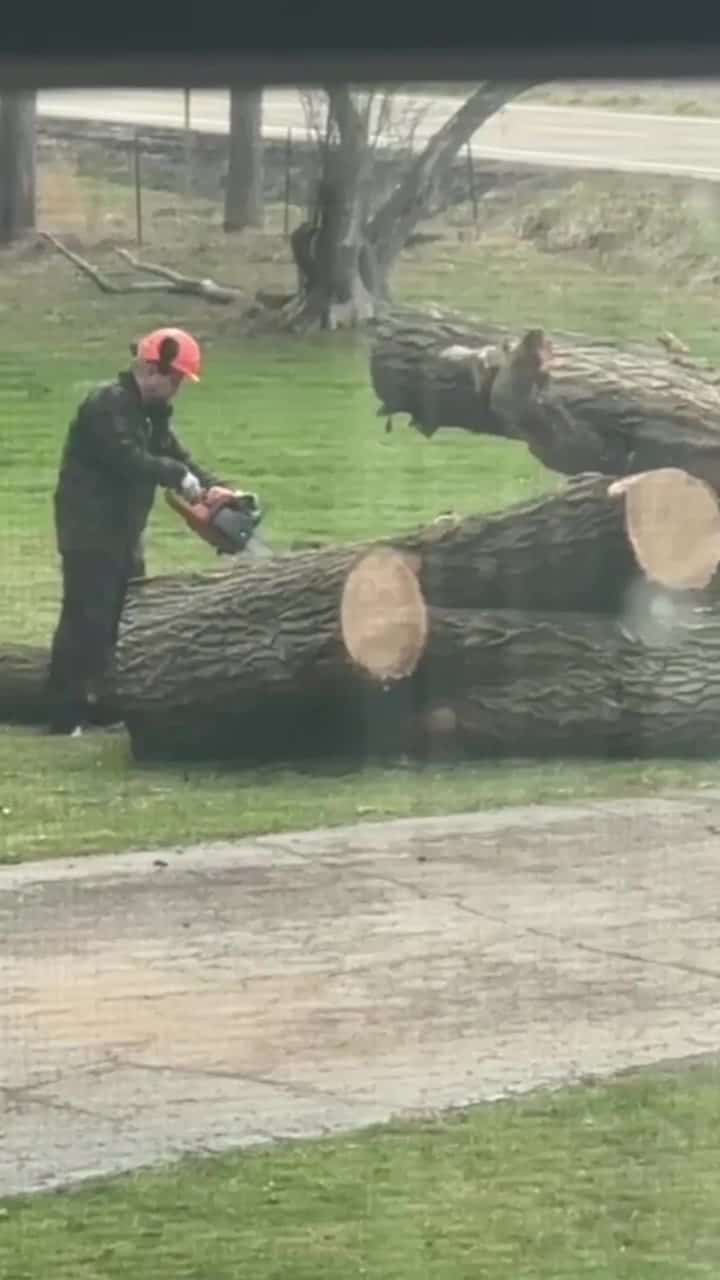
Some of the ash logs were so large in diameter that I found myself cutting from both sides to get through them.
A larger Husqvarna Rancher might have made quicker work of some of those logs, but I wanted to see what the equipment I already owned could accomplish.
And much to my satisfaction, it got the job done.
For what might be considered a more entry-level gas chainsaw, the Husqvarna 440 turned out to be quite a little workhorse during this particular project.
Starting My Husqvarna 440 Gas Chainsaw
When the chainsaw was brand new, getting it started from cold occasionally required some patience.
Husqvarna advertises its Smart Start technology and combined choke and stop control as features intended to make starting easier.
My personal experience was that cold starting wasn’t always quite as effortless as I had expected initially.
Once it was running, though, I found the 440 quite pleasant to work with.
For anyone looking for information about the choke, starting controls or proper use of the chain brake, Husqvarna provides official chainsaw starting instructions.
As someone who is still learning, I’d much rather refer readers to the manufacturer than pretend I’m qualified to teach anyone how to operate gas chainsaws.
Husqvarna 440 Fuel Consumption During the Cleanup
I purchased 50:1 premixed two-stroke fuel for the chainsaw.
A 50:1 fuel-to-oil ratio corresponds to approximately 2.6 fluid ounces of two-stroke oil per US gallon of gasoline.
Husqvarna offers its own XP+ 50:1 premixed fuel, among other products intended for compatible two-cycle engines.
During the ash cleanup, I often spent four to five hours outside working through the enormous pile of wood.
Depending on the amount of cutting I managed to get done, I would refuel the chainsaw approximately two to three times during those sessions.
I wasn’t conducting a controlled fuel efficiency test. I wasn’t timing individual cuts or measuring precisely how much fuel I consumed per log.
I was simply trying to get through an enormous pile of wood.
Coming from years of using a battery-powered Greenworks chainsaw, I appreciated being able to refuel and get back to work without having to wait for another battery to charge.
That is one of the differences I’ve come to appreciate between my cordless and gas-powered chainsaws.
Why the Lightweight Design of the Husqvarna 440 Mattered to Me
When shopping for chainsaws, it’s easy to get caught up in engine displacement, horsepower and the length of the bar and chain.
I can understand the appeal of having a bigger and more powerful chainsaw.
But spending an entire afternoon holding one gives you a slightly different perspective.
Husqvarna lists the powerhead of its 440 at approximately 9.78 pounds without the cutting equipment attached.
What mattered more to me than that number was how much less bulky the saw felt compared with my Black Max 20-inch chainsaw.
Husqvarna 440 vs. My Black Max 50cc Chainsaw
My Black Max has a larger engine and a longer bar, but I find it considerably more cumbersome to handle.
That isn’t something I necessarily pay much attention to when cutting a few small logs.
After several hours outside, though, I appreciate the difference.
There’s a lot more involved in a job like this than simply holding a chainsaw. There is wood to move, equipment to carry and plenty of physical work between cutting sessions.
By the end of an afternoon, I’m fairly tired.
The lightweight construction and easy handling of the Husqvarna 440 were among the things I appreciated most throughout this project.
Husqvarna’s LowVib technology is designed to dampen vibrations, but I haven’t measured the difference in vibration between my chainsaws.
I can only say that I personally found the 440 more manageable during those extended afternoons of work.
The Challenges of Cleaning Up Storm-Damaged Trees
There was one particularly large log sitting right on top of the pile.
Its position made me uncomfortable, and I occasionally found myself worrying about what might happen if it shifted.
I wore my Husqvarna protective chainsaw pants and a helmet during the work. I knew fatigue would eventually become a factor, especially after several hours outside.
The Husqvarna 440 features an inertia-activated chain brake designed to reduce the risk of injury due to kickback.
But protective equipment and chainsaw safety features have their limitations.
A helmet isn’t going to save anyone from being crushed by an enormous rolling log.
Unstable timber and storm-damaged trees can be extremely dangerous. The initial tree removal was handled by a professional company, and unstable or tensioned logs can require further professional assistance.
Having spent several years maintaining this property, I’m learning that there’s a difference between being willing to tackle a difficult job and knowing whether you’re equipped to handle it safely.
Husqvarna 440 Bar and Chain Maintenance
Another thing that impressed me during this project was the performance of the chain itself.
Compared with my experiences using some of my other chainsaws, I was pleasantly surprised by how well it performed.
With the amount of hardwood I had to process, keeping the chain sharp became another recurring part of my work.
Sharpening My Husqvarna Chainsaw Chain
Throughout the project, I regularly sharpened the chain in my garage using a 3/16-inch (4.8 mm) round file.
That’s the file I used for my particular chain.
Husqvarna chainsaws can be fitted with different compatible chain configurations, including certain X-Cut chains. Sharpening specifications depend on the actual chain fitted to the saw rather than just the chainsaw model or whether it has an 18-inch bar.
Chain Tensioning and Routine Maintenance
The standard Husqvarna 440 uses a side-mounted chain tensioning mechanism. The related 440e model has a different, tool-free tensioning system.
I haven’t owned or tested the 440e, so my experiences here relate to my own 440.
Throughout this project, attending to the bar and chain was simply part of the routine.
Cutting wood, hauling wood, refueling, sharpening the chain and doing it all over again.
There was certainly no shortage of things to do.
Yes, I Hauled Enormous Ash Logs With a Dolly
Now, this is probably the part where some of you are going to laugh.
The logs were incredibly heavy, and I still needed to move them to the area where I intended to split them.
I could have hooked a trailer up to my Cub Cadet mower and transported the wood that way.
Instead, I decided to haul some of the logs with a dolly.
Why?
Gas costs money.
Perhaps not the most efficient approach, but that’s part of maintaining this property. I’m constantly weighing convenience against the cost of getting something done.
Sometimes I make things unnecessarily difficult for myself in an attempt to save a few dollars.
Welcome to Kevin Vs The Yard.
Two Weeks Later: From Fallen Ash to Firewood
The entire project took me approximately two weeks.
That’s not two weeks of uninterrupted chainsaw work. I’m a stay-at-home father of two children, and my time outside needs to fit around my responsibilities at home.
Whenever I had an opportunity, I went back outside and worked through more of the pile.
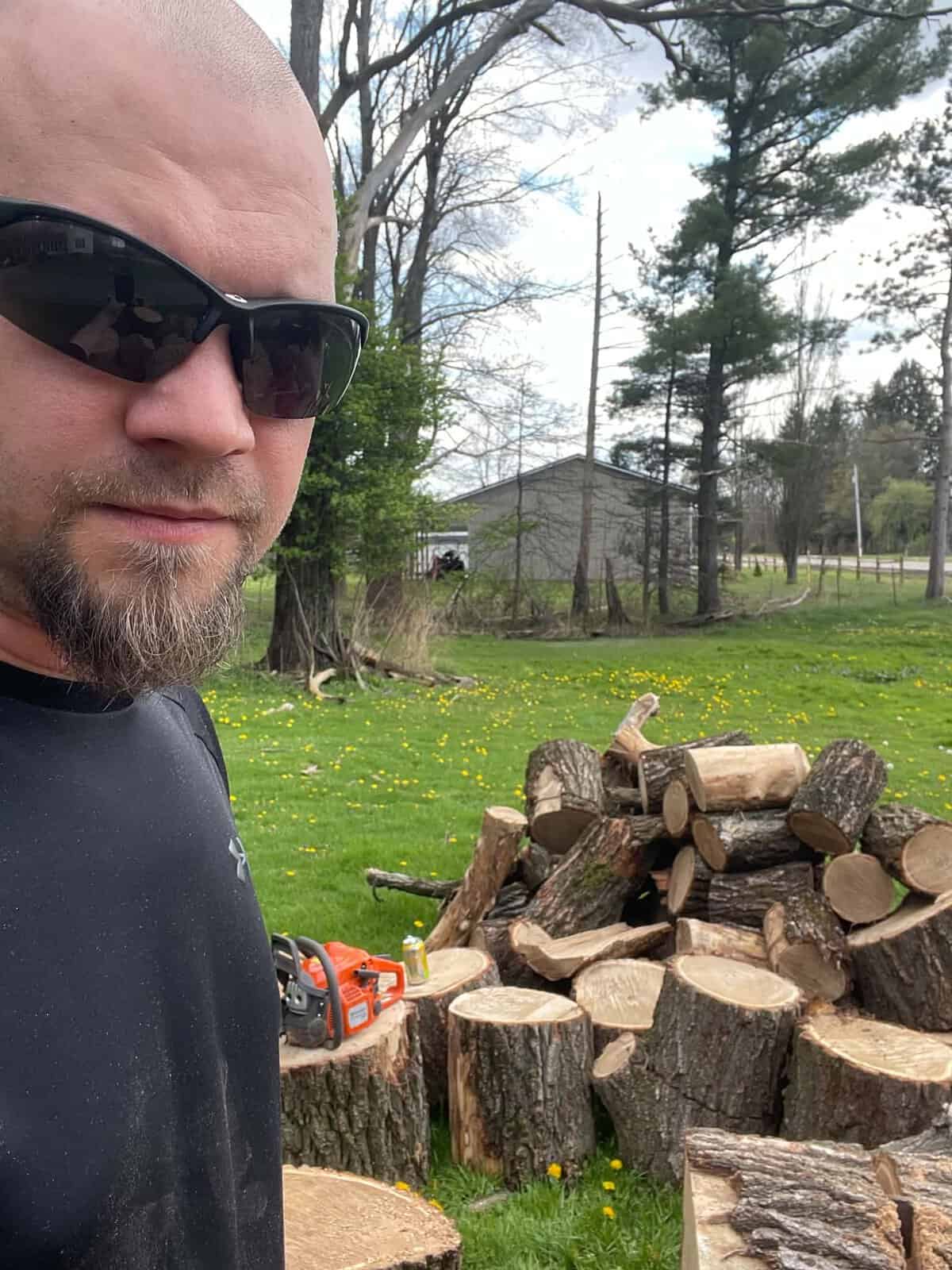
Eventually, what had started as a gigantic tree blocking our driveway and damaging our house turned into something considerably more useful.
Firewood.
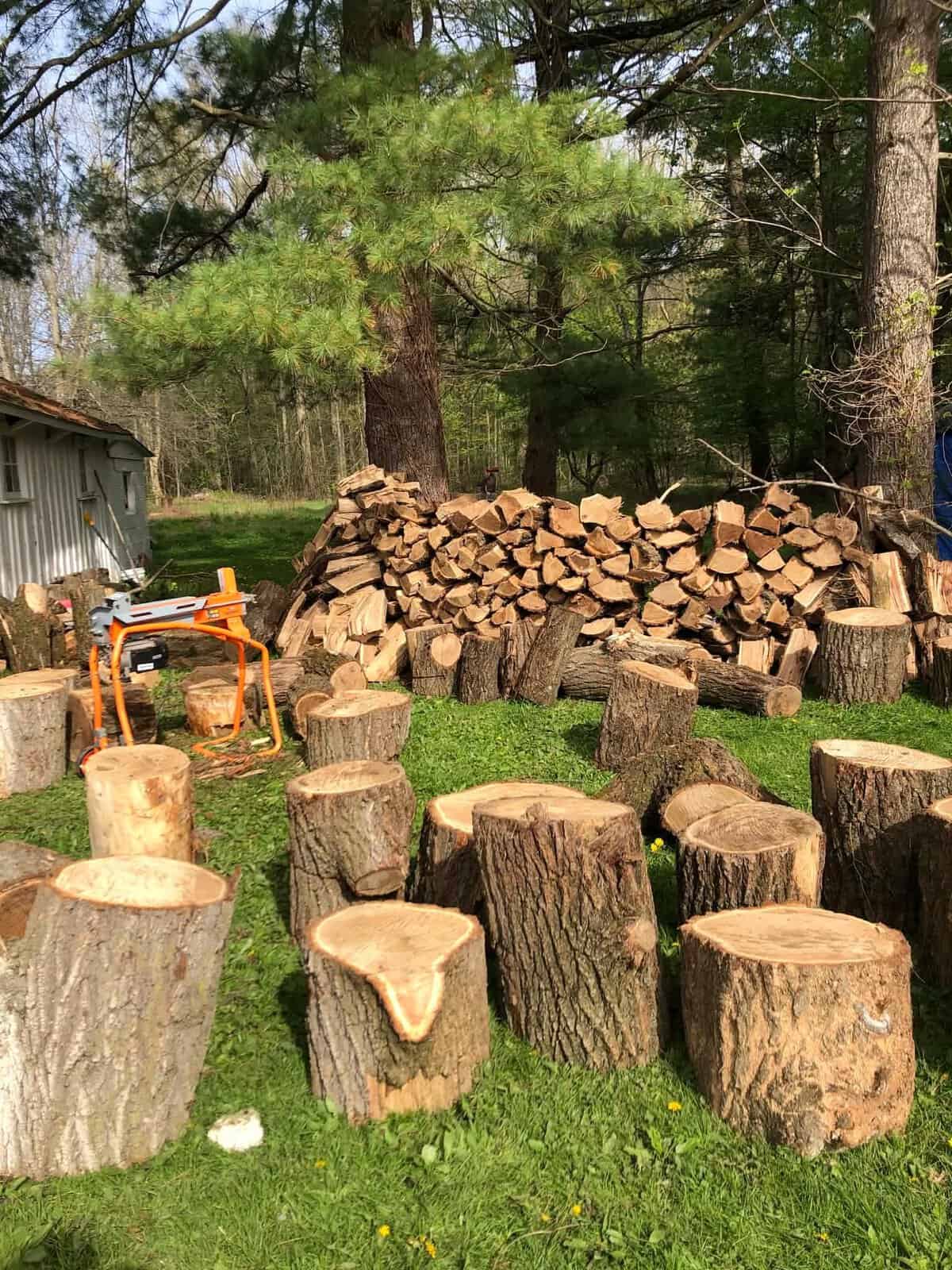
There is something rather satisfying about looking at a finished pile of firewood after spending that much time cutting, hauling and splitting it.
The storm certainly wasn’t something I would have wished for, but at least I was able to put the fallen tree to good use.
Watch the one-minute ash-tree cleanup with my Husqvarna 440 on YouTube.
My Honest Experience With the Husqvarna 440 Chainsaw
After this particular job, I walked away genuinely impressed with the Husqvarna 440.
I can understand why relatively lightweight, all-around gas chainsaws might appeal to homeowners and landowners who have recurring property maintenance work.
For someone like myself, who spends time cutting firewood, dealing with fallen trees and maintaining woodland, this particular chainsaw has proven quite useful.
That doesn’t mean every landowner needs one, nor does it mean I’ve established that it’s better than other chainsaws in its class.
What I Liked About the Husqvarna 440
- Its comparatively lightweight construction.
- The comfortable handling during extended work sessions.
- Its ability to get through much larger hardwood logs than I initially expected.
- The performance of the chain.
- The convenience of refueling during longer jobs.
- The fact that I completed the project without needing to purchase a larger chainsaw.
The Limitations I Experienced
- Cold starting occasionally required some patience, particularly when the chainsaw was new.
- Some of the larger ash logs required considerably more work than they might have with a bigger chainsaw.
- Regular refueling, sharpening and maintenance remained necessary throughout the project.
I haven’t had to evaluate the warranty through a claim related to this project, so I can’t offer any personal assessment of Husqvarna’s warranty service. Coverage details can be found directly through Husqvarna’s official product information.
Is the Husqvarna 440 the Best Chainsaw?
Am I going to declare the Husqvarna 440 the best chainsaw on the market?
No.
I haven’t used anywhere near enough chainsaws to make that claim.
I’m not an equipment expert, nor am I particularly interested in telling people which chainsaw they ought to purchase.
What I can say is that I put my Husqvarna 440 through the biggest property maintenance job I’ve undertaken in 2026, and it accomplished what I needed it to accomplish.
I didn’t expect a professional forestry machine. I wanted a reasonably lightweight chainsaw that I could handle for extended periods and use to get through a rather enormous pile of firewood.
For me, the Husqvarna 440 did precisely that.
And I walked away impressed.
What’s Next for Kevin Vs The Yard?
Over the past five years, I’ve accumulated plenty of photographs, videos, tools, experiences and frustrations maintaining our ten acres in northeastern Ohio.
This ash tree is just one of the many projects I intend to document here.
I’ll be sharing more about the equipment sitting in my garage, including my Greenworks cordless chainsaw, my rather troublesome Black Max gas chainsaw and the hand tools I use for splitting firewood each year.
There will be tools I like, tools I regret purchasing and plenty of things I’m still figuring out.
No expert verdicts. No pretending to know it all.
Just ten acres, the tools I own and whatever the yard decides to throw at me next.
Sometimes I win. Sometimes the yard does.